
In Surface Mount Technology (SMT), all components have to be soldered on the PCB with high precision. JUKI pick-and-place machines pick and place parts with tiny nozzles, which in turn affects performance of the machine directly. With the nozzle in good condition, the items are picked up easily and put in the right position.
This article explains the quality of JUKI SMT nozzles and the way they minimise errors during placement. It also addresses the key reasons for such mistakes and the way of choosing and keeping the proper nozzles in order to achieve stable and reliable production.
Understanding JUKI SMT Nozzles
What SMT Nozzles Do
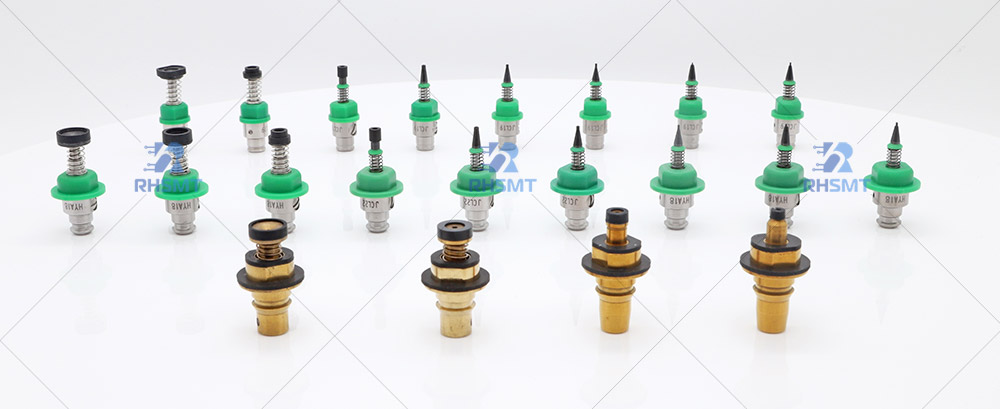
SMT nozzles are small tools that are used to pick parts and place them on a PCB using suction. They regulate the pick-up, movement and precise location of each component in JUKI machines.
Types of JUKI Nozzles
Standard nozzles – Used for picking and placing regular, commonly sized SMT parts.
High-precision nozzles – Designed for very small, light, or sensitive components.
Special nozzles – Made for handling odd-shaped, large, or fragile electronic parts safely.
What Makes a Good Nozzle
High-quality nozzles are constructed using strong materials and smooth and well-shaped tips. This aids in maintenance of suction effectiveness and placement.
How Nozzle Quality Impacts Placement Accuracy
Better Pick-Up Stability
A good nozzle holds the part securely. A worn or dirty nozzle can lose suction, drop parts or place them incorrectly.
Less Wear and Clogging
When a nozzle is scratched, bent or blocked internally, it is unable to draw in sufficient air. This is a weak suction which results in placement errors.
Better Alignment
The nozzle that is good assists the machine in positioning the part in a precise location. Bad quality nozzles lead to rotation or misplacement.
Key Causes of Placement Errors from Nozzle Issues
Worn, damaged or cracked nozzles have weak suction and it is difficult to hold parts firmly with nozzles as a result of worn or damaged nozzles leading to drop or shift problems.
The incorrect nozzle size used on a component will decrease the grip strength, causing pick-up to be unstable and placement to be inaccurate.
Dust or dirt that blocks airway blocks airflow and thus the nozzle will not be able to draw in enough air to move parts in the right direction.
A loose fit between the nozzle and machine head causes unstable movement and the part moves or rotates during the placement.
Poor cleaning and maintenance also enable dirt and wear to accumulate thus weakening suction and increasing placement errors.
Advantages of Using High-Quality JUKI SMT Nozzles
Superior Placement Accuracy & Quality
The JUKI SMT nozzles are of high quality that ensures that each part is picked firmly and then positioned where it belongs. This minimizes misplacing errors as well as enhancing the quality of PCB generally.
Enhanced Production Efficiency
The improved nozzles are faster and smoother. They contribute to the smooth running of the machine without any interruptions so that you are able to complete more boards in less time.
Increased Durability & Longevity
Nozzles of high quality are made from stronger materials. They also have a long lifespan, and do not wear out easily during long production runs.
Broad Component Versatility
There are numerous components that can be accommodated by good nozzles, big, small, light, or heavy. It is less difficult to operate various jobs without the necessity to change nozzles so frequently.
Reduced Downtime
With the correct functioning of nozzles, machine errors and stoppages are minimal. This implies that you are not wasting time fixing issues but rather maintaining the line.
Cost-Effectiveness
Although the nozzles of high quality can be rather more expensive, it saves money in the long term. They eliminate scrap, rework, breakdowns, and frequent replacement.
Optimized for JUKI Machines
These nozzles will suit JUKI machines. They are more suitable, work better and assist all machine functions to provide smooth and accurate placement.
How High-Quality Nozzles Reduce Placement Errors
Nozzles of high quality are produced in the right size and shape depending on the nature of the parts they serve. Their smooth interior surface allows them to ensure constant suction and not to drop or place parts in the wrong position.
They have parts that are held tightly even in the event of the machine moving fast. They are also dust resistant which prevents blockages. Numerous high quality nozzles will be designed to have a longer life and maintain stable performance over time by incorporating built-in vision or calibration features to automatically correct minor errors.
Best Practices for Maintaining Nozzle Quality
Cleaning of JUKI nozzles frequently helps keep them in good condition and prevent the accumulation of dust and paste. Always inspect all nozzles (scratch, bends, and cracks) and also check the suction to ensure that the air is flowing well. In case you find any worn or damaged nozzle, change it immediately rather than attempt to use it again.
Tracking nozzle usage and keeping them in a safe place will also contribute to increasing their lives.These steps are simple and this minimizes errors in placement, machine downtimes, and smooth, reliable production.
Choosing the Right JUKI Nozzle Supplier
Material quality- Select nozzles that are of strong materials. Quality materials are used to enable the nozzle to have longer life and be able to sustain constant suction in the production process.
Fit with your JUKI machine model- It is important to ensure that the nozzle fits your specific model of JUKI machine. Good fit also ensures that the machine is in smooth operation and no alignment problems are experienced.
Durability and suction performance- Select nozzles that are capable of running long production cycles without wearing out. High level suction is used to guarantee the correct pick-up of the parts each time.
Smooth tip finish- A smooth and smooth tip will assist in the gripping of components. Rough or uneven tips may cut components or make them slip out of position.
Good customer support- Select a supplier and one who is fast, provides advice, and assists in problem-solving. Maintenance and replacements are made easier by good support.
Avoid poor-quality nozzles- Do not use rough-tipped nozzles, weak suction, and loose fit nozzles. Such problems may result in the errors of placement and delays during production.
Conclusion
JUKI SMT nozzle quality plays a key role in reducing placement errors and keeping your SMT line stable. Good nozzles help the machine pick and place parts accurately, reducing mistakes and rework.
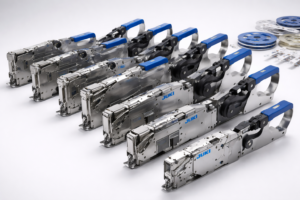
By choosing high-quality nozzles, cleaning them often, and replacing them when worn out, you can maintain stable production and protect delicate components. For long-term, smooth SMT operations, always invest in reliable JUKI nozzles for your SMT feeder.
FAQs
Q. Can a worn nozzle cause placement errors?
Yes, worn nozzles weaken suction and can place parts in the wrong position.
Q. How often should I clean SMT nozzles?
Clean them regularly and check them daily for dust.
Q. Does nozzle material matter?
Yes, strong materials improve nozzle life and suction stability.
Q. Should one nozzle be used for all parts?
No. Using the wrong nozzle size increases placement mistakes.