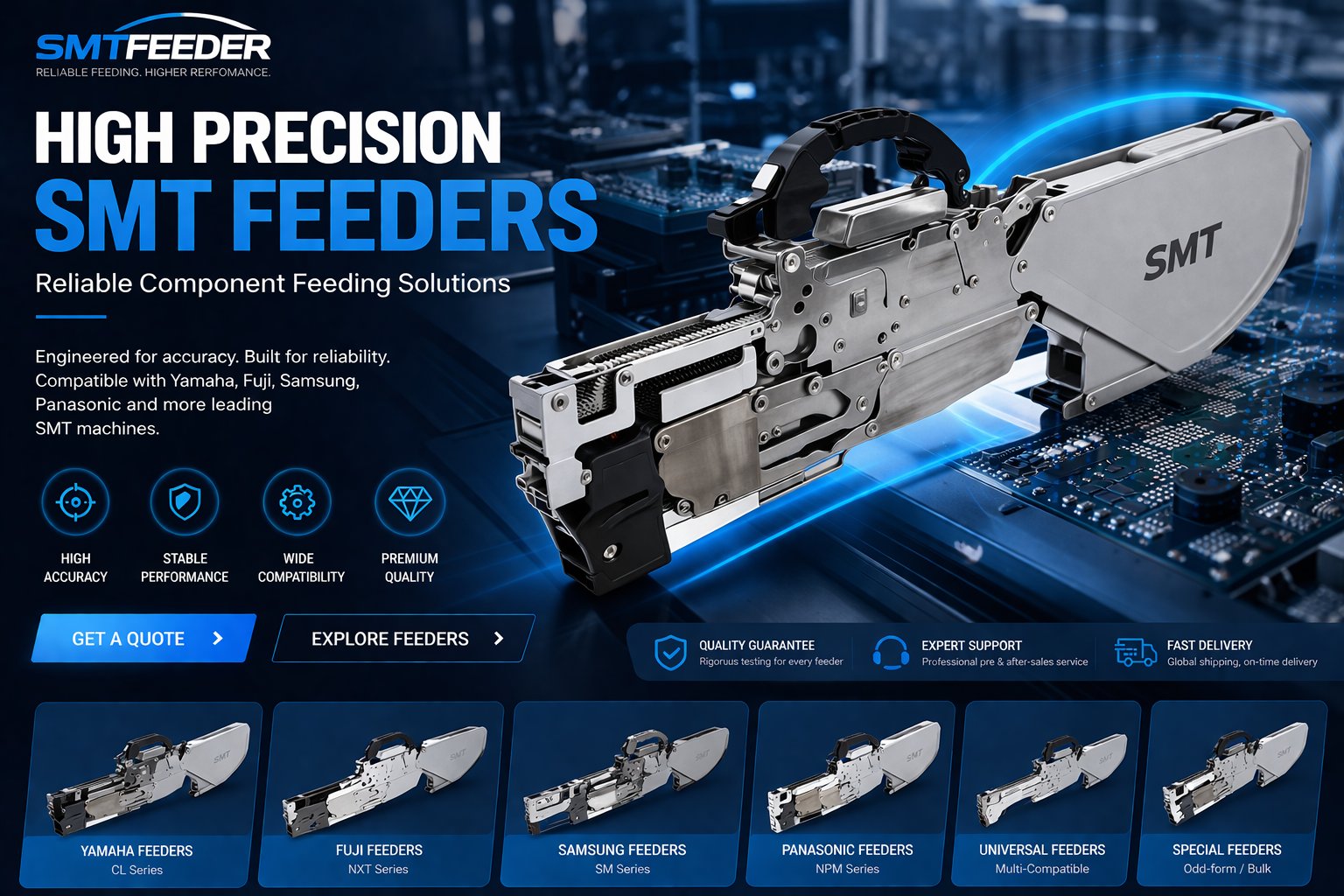

In today’s rapidly moving electronics industry, SMT feeders play an essential role to maintain efficient production processes. The selection of an OEM feeder or an aftermarket feeder determines assembly performance, operational expenses, and equipment upkeep requirements. Manufacturers need to understand these two options because they want to keep their equipment running without reducing their production capacity.
With this guide, you will understand all the factors and considerations to make an uniformed decision.
What Are OEM and Aftermarket SMT Feeders?
OEM (original machine manufacturers) SMT feeders are built specifically for the equipment used in the original manufacturing process. These components are manufactured according to exact specifications and go through quality testing to ensure that they perform flawlessly when connected to your machines.
Aftermarket STM feeders are produced by third-party suppliers. The products typically display lower initial costs. The majority of aftermarket feeders advertise their ability to replicate OEM specifications, yet minor distinctions in their design and construction result in variances between their feeding performance and operational durability.
OEM vs Aftermarket SMT Feeders: A Comprehensive Comparison
The decision between selecting OEM feeders and aftermarket SMT feeders determines the system’s reliability together with its operational costs and equipment compatibility.
1. Quality and Reliability
OEM SMT Feeders:
OEM feeders are designed to provide exact performance and long-lasting service life. All machine parts are developed as compatible elements, which will eliminate faults while decreasing operational downtime. OEM feeders deliver precise component positioning for fine-pitch and high-density assemblies, which guarantees product quality through dependable operation.
Aftermarket SMT Feeders:
Aftermarket feeders can be acceptable for less critical tasks, but subtle differences in design or material quality may affect consistency. The system operates correctly but faces increased chances of misfeeding and equipment stoppage during high-demand periods.
2. Compatibility and Flexibility
OEM SMT Feeders:
OEM feeders guarantee perfect compatibility with your equipment and firmware updates. It comes with technical support, which helps customers to successfully implement new machines and software updates.
Aftermarket SMT Feeders:
Aftermarket feeders need manual checks and equipment adjustments before they can operate properly. The system has tight restrictions on its capacity to operate, and the solution process will take longer because dedicated support is unavailable, which will decrease operational efficiency.
3. Cost
OEM SMT Feeders:
The initial expense of OEM feeders is higher, but their total value creates long-term benefits. It provides all benefits to the organization because it helps organizations experience fewer work interruptions and decreased damage to components and extended equipment operational time.
Aftermarket SMT Feeders:
The lower initial price presents an attractive offer, yet unexpected costs, including equipment failures and replacement needs and recalibration tasks, will result in greater expenses throughout the product’s lifespan.
4. Maintenance & Support
OEM SMT Feeders:
OEM feeders require little more than routine cleaning and lubrication for efficient upkeep. Their manufacture-supported warranty service and readily available, exact-replacement parts guarantee the quickest problem resolution and maximum uptime.
Aftermarket SMT Feeders:
The performance of aftermarket feeders decreases because they provide limited support and lack essential replacement components. The process of maintenance requires more skilled labor because technicians need to spend additional time on diagnosis.
When to Choose Each
The decision between choosing OEM or aftermarket SMT feeders depends on three factors, which include product expenses, equipment efficiency, and production needs. Although aftermarket products decrease upfront costs, they create performance problems and dependability issues and incompatibility challenges. OEM feeders have established themselves as the top choice for manufacturers who require precise equipment and long-lasting performance and shielded customer service.
Conclusion
OEM SMT feeders give better efficiency, operational capacity, and reliability. The aftermarket feeders fulfill the demands of small-scale operations, yet they do not match up to the OEM in terms of their performance and technical support.
Choosing an efficient SMT feeder supplier will ensure your production line runs smoothly without facing any problems, with the added benefit of precise results.
FAQs
Why should I select OEM SMT feeders instead of using aftermarket feeders?
OEM feeders deliver accurate performance, which works with all systems while maintaining operational efficiency throughout their entire lifespan, which proves essential for handling high-speed operations and complex manufacturing processes.
Are aftermarket feeders ever a good choice?
It can be when low-volume or noncritical assemblies are where initial cost savings are a priority.
How do I find a reliable SMT feeder supply?
Work with a reputable supplier who provides OEM feeders plus support services and fast access to replacement parts to maintain your production schedule.
Do OEM feeders save money in the long run?
Yes, their durability, fewer stoppages, and reduced maintenance costs enable them to balance their initial expense through all their operational lifespans.