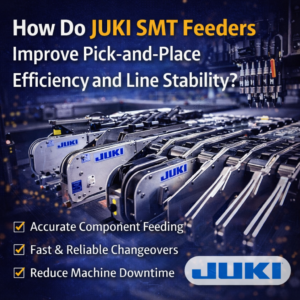
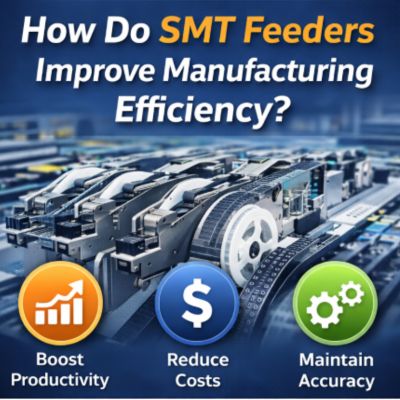

In modern-day electronics production, SMT feeders are important factors. Surface mount technology (SMT) has transformed production lines by supporting small scale high density circuit boards. SMT assembly requires both efficiency and precision and SMT feeders are essential in maintaining the latter. They assist manufacturers in saving time, minimizing mistakes, and enhancing overall productivity by automating the delivery of components to pick-and-place machines.
What Are SMT Feeders?
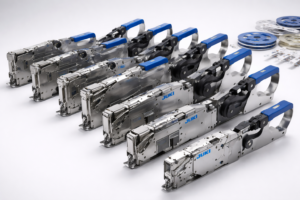
SMT feeders are machines that feed the pick-and-place machines with electronic components to be assembled. They are mainly used to store, arrange, and deposit components precisely.
Types of SMT Feeders include:
- Tape feeders: For components in carrier tapes.
- Tray feeders: For components supplied in trays.
- Stick feeders: For components in tubes or sticks.
- Specialty feeders: Custom solutions for unique or high-precision parts.
These feeders integrate seamlessly with pick-and-place machines, ensuring a continuous and reliable supply of components.
Role of SMT Feeders in the Production Process
SMT feeders are significant in current assembly lines. They display components automatically; therefore, workers do not need to do it manually. This minimizes errors and makes the work accurate.
They also allow operators to concentrate more on quality control rather than dealing with parts. Feeders maintain a constant supply of components to the machines, which ensures the line continues to run without interruption.
Key Ways SMT Feeders Boost Manufacturing Efficiency
Faster Component Placement
SMT feeders maintain the stock level of components in pick-and-place machines. This ensures the machines do not need to stop and wait for parts. This leads to a faster placement of the components and additional boards can be assembled in the same duration of time. Speed of production is increased without quality being compromised.
Reduced Errors and Waste
Once the parts are fed correctly using the feeders, errors in part placement are minimized. A reduction in errors results in fewer defective boards and less scrap.This is useful in saving money and resources and keeping the production process going in a smooth and reliable manner.
Streamlined Line Changeovers
Feeder systems allow quick swaps when changing component types on the production line. This reduces the time needed to set up for a new batch. Less downtime allows the production line to operate more flexibly and handle different products efficiently.
Optimized Workflow and Productivity
The quick swaps when changing the type of components on the production line are made possible by feeder systems. This saves time required to prepare a new batch. Minimized downtime implies the production line will be more flexible and can produce other products effectively.
Advanced Features Enhancing Efficiency
Modern SMT feeders offer advanced functionalities:
Intelligent Feeders
Some SMT feeders are smart. They can detect issues and inform you if anything is wrong.They can alert you to an issue before it occurs, preventing unexpected machine stoppages.
High-Speed Compatibility
These feeders are compatible with high speed machines. They feed the machines with parts at an alarming rate and this leaves the line running.This helps produce more products in a shorter period.
Support for Small and Complex Components
The sophisticated feeders are capable of working with very small or tricky components which are difficult to place manually. This aids in the production of contemporary electronics with no errors or damaged components.
Real-World Examples / Case Studies
A small electronic company began using automatic SMT feeders in the production line. Their use showed them enormous improvements after utilization. They were able to increase production per board by 20%. Errors and scrapped boards were reduced by 15%.Overall, they produced 25% more goods in the same time frame.
This demonstrates that the SMT feeders are used to make production easier, faster, and more efficient.
Choosing the Right SMT Feeder for Maximum Efficiency
When selecting an SMT feeder, ensure it is compatible with the parts and fits your machines. When you manufacture many parts, you should choose a feeder that has the capacity of carrying more parts.
Another consideration is cost and reliability. It is preferable to pay slightly more for a feeder that will last and perform reliably than to buy a cheap one that may fail in the future.
Conclusion
The benefits of using SMT feeders include automation of component delivery, minimizing errors, and streamlining workflow. For an electronics manufacturer wanting to increase output, choosing the right feeder is essential. At SMT Feeder, we offer a quality SMT feeder system that is developed to achieve precision, reliability and maximum output to ensure your production line can achieve its maximum output.
FAQs
Q. What is the main function of an SMT feeder?
SMT feeders supply components to pick-and-place machines for assembly, ensuring consistent and accurate delivery.
Q. How do SMT feeders reduce production errors?
By automating component placement and minimizing manual handling, feeders prevent misplacement and defects.
Q. Can SMT feeders handle small or complex components?
Yes, modern feeders support tiny, delicate, or uniquely shaped components, improving overall line efficiency.
Q. What types of SMT feeders are available?
Common types include tape, tray, stick, and specialty feeders, each suitable for specific component formats.