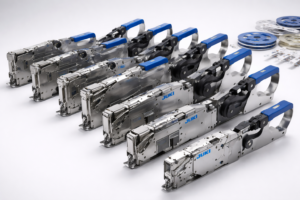


Authentic Yamaha SMT nozzles are essential to the accuracy and stability in present-day pick-and-place operations. With the continued miniaturization and increased complexity of electronics, manufacturers face a major question: do they invest in OEM Yamaha nozzles or use less expensive aftermarket options? It is a performance-based, cost-based and long-term reliability-based evaluation guide that is very much experience-driven and practical in nature.
Understanding the Role of SMT Nozzles in Yamaha Machines
SMT nozzles are the fingertips of a pick-and-place machine. They take parts in vacuum pressure and attach them on PCBs with precision. A slight misalignment may lead to rework, failure of the entire product, or cause constant misalignment.
Nozzles directly influence:
- Placement accuracy and repeatability
- Vacuum stability for micro-components
- Machine cycle speed
- First-pass yield and defect rate
Yamaha YS and YSM series machines are engineered for high precision. Using non-genuine parts is like fitting budget tires on a sports car—the machine works, but not at its designed potential.
Problems Caused by Low-Quality Nozzles
- Frequent mis-picks and dropped chips
- Unstable vacuum pressure
- Increased calibration cycles
- Higher rework and scrap costs
- Unexpected line downtime
Genuine Yamaha SMT Nozzles vs. Aftermarket Options
Using genuine Yamaha nozzles instead of cheap alternatives can improve accuracy and keep your machines running smoothly.
Material & Manufacturing Standards
Real Yamaha SMT nozzles are fabricated with maximum machining accuracy and OEM quality. They employ wear resistant materials and model-specific design to maintain stable flow of air and proper placement of the components.
Aftermarket nozzles can be similar, though it is common that they are different in quality of materials and internal construction. Such variations may influence performance in the long term, placement accuracy, and machine reliability.
Performance Comparison
| Factor | Genuine Yamaha | Aftermarket |
| Placement accuracy | Excellent | Inconsistent |
| Lifespan | Long | Shorter |
| Vacuum stability | High | Variable |
| Machine compatibility | 100% | Risky |
Hidden Costs of Cheap Alternatives
The cheap aftermarket nozzles may cause more frequent changes and unplanned production failures. Such issues can lead to quality problems with PCBs, missed deadlines, and additional maintenance work that interferes with daily operations.
In the long run, the low-end products can also pose a threat of machine warranty and increased repairs costs. A cheaper purchase price might seem good, but it does not imply a lower overall cost of ownership.
ROI Analysis – Do Genuine Nozzles Pay for Themselves?
Even though genuine nozzles cost more upfront, they save money over time by reducing errors and maintenance.
Cost Factors to Consider
When quantifying SMT nozzles, consider more than the initial purchase cost. The questions to consider are service life, effect on the Overall Equipment Effectiveness (OEE), labor on maintenance and waste of the components. These issues have a direct impact on efficiency and long-term costs.
Real-World Savings
Manufacturers discover that actual Yamaha SMT nozzles produce up to 30 percent fewer errors in placement, extended maintenance, and minimal operator interventions. They also provide stable performance for small chips such as 0201 and 01005. OEM nozzles are similar to great engine oil. They are silent, guard the whole system, and keep production running on schedule.
When Genuine Yamaha SMT Nozzles Are a Must
Authentic Yamaha SMT nozzles. SMT nozzles need to be used in high-density PCB assembly and processes that require extreme precision. They are particularly required in automotive electronics, medical electronics, fine-pitch BGA and CSP parts and around-the-clock 24/7 mass production.
These nozzles are also strongly suggested in the new production lines of Yamaha YSM10 and Yamaha YSM20, where stable performance and precision have a direct impact on yield and reliability.
Best Practices to Maximize Nozzle Lifespan
To maintain the lifespan of SMT nozzles, they should only be cleaned using approved solvents and never with metal tools on the tip. Nozzles should always be stored in anti-static trays in order to avoid damage and contamination.
Ensure that the nozzle type matches the component package to fit the part correctly on pickup and placement. Weekly checkups also help identify wear early to ensure consistent quality in production.
How to Identify Authentic Yamaha SMT Nozzles
You must always buy original Yamaha SMT nozzles to be sure that you are acquiring the right ones. Check the part numbers and QR labels on the packaging, and ensure that the nozzle body has laser-marked serial codes.
The weight and finish quality can also be compared to known OEMs. Real nozzles are usually highly machined, coated and feel solid whereas fake ones do not.
Conclusion
Selecting authentic Yamaha SMT nozzles is not merely a decision about parts but a production strategy. The benefits of OEM nozzles include stable vacuum delivery, increased first-pass yield, and reduced downtime and profitability is an immediate benefit. In the case of the contemporary SMT lines that are concerned with quality and efficiency, long-term benefits of such lines far outweigh the initial savings of alternatives. By collaborating with a reputable supplier such as SMT Feeders, one can be assured of genuine parts, technical services and uniform performance in the manufacturing.
FAQs
Q. How long do genuine Yamaha SMT nozzles last?
Typically 6–12 months depending on production volume and cleaning practice.
Q. Can aftermarket nozzles damage Yamaha machines?
They may not damage immediately but can cause calibration drift and feeder errors.
Q. How often should SMT nozzles be cleaned?
For high-volume lines, weekly cleaning is recommended.
Q. Are genuine nozzles necessary for 0201 components?
Yes, micro-chips require OEM-level vacuum precision.